Advanced LLM Applications and Agentic Systems - Training at EPFL

Johan Berdat joined the SDSC in May 2019 as a Senior Machine Learning Engineer in the Innovation team, based in Lausanne.
After completing his M.Sc. in Computer Science at EPFL, he worked for a few years as a consultant in the industry. Specialized in natural language processing (NLP) and computer vision, he loves challenges in document analysis and knowledge extraction.


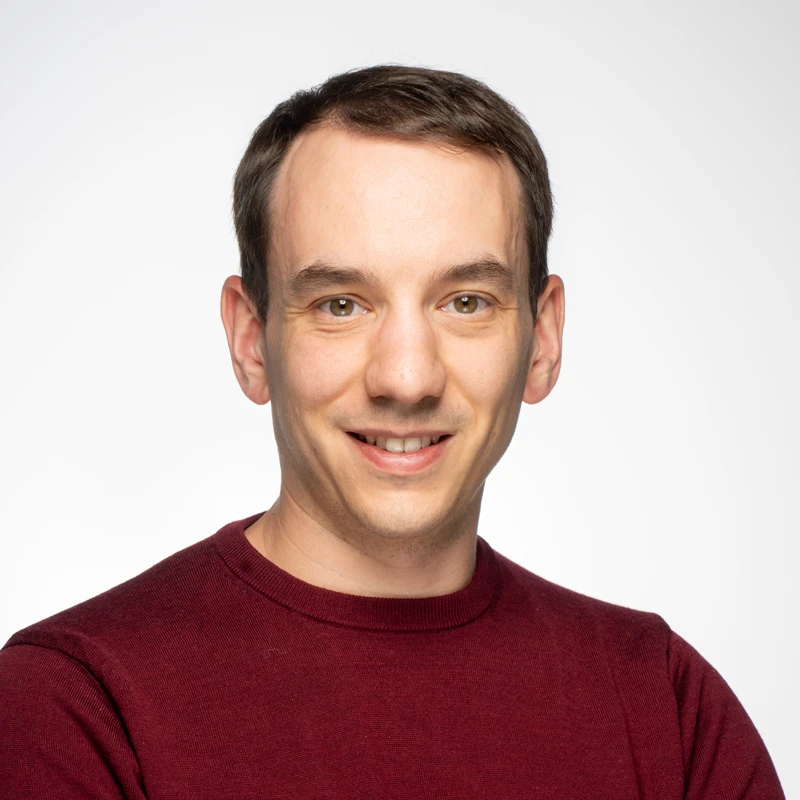
Clément Lefeebvre joined the SDSC in January 2019 as a Data Scientist with an emphasis on industry-oriented projects in the Innovation team, based in Lausanne.
He holds a Bachelor of Science degree in Physics, acquired in 2016 from the École Polytechnique Fédérale de Lausanne (EPFL) in Switzerland. Following this, he earned a Master of Science in Computational Science and Engineering in 2018, also from EPFL. Throughout his academic journey, Clément concentrated on leveraging Data Science and Machine Learning techniques to enhance efficiency in industrial processes. Subsequently, he developed a specialized interest in Generative AI, with a particular focus on Natural Language Processing (NLP), especially in the application of Large Language Models for innovation.
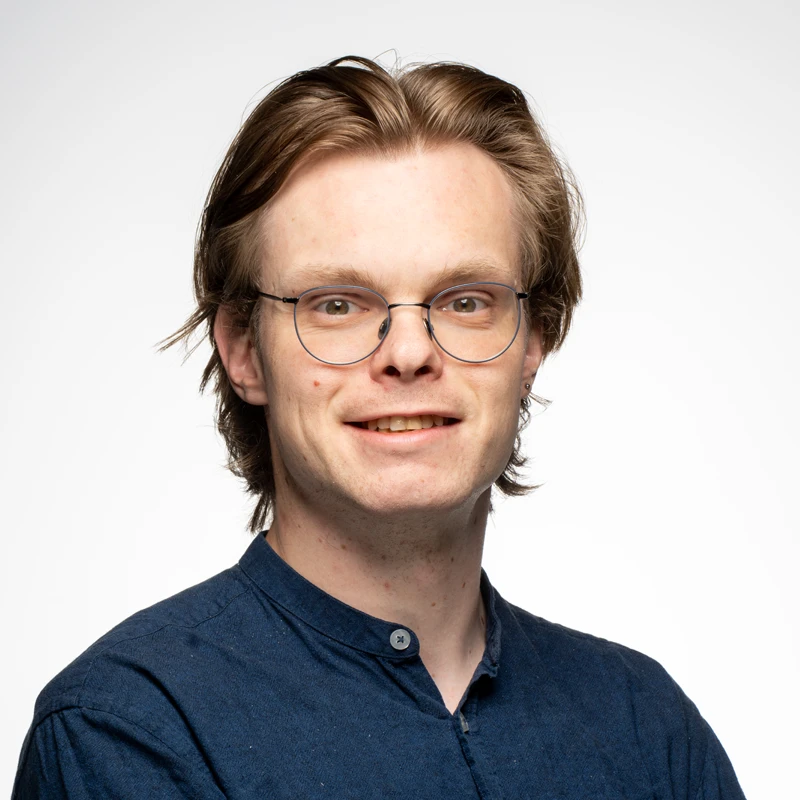
Klemen Voncina joined the SDSC in April 2026 as a Machine Learning Engineer in the Innovation team, based in Lausanne.
Klemen holds an MSc in Artificial Intelligence from the University of Groningen. Prior to this, Klemen worked for several years in both consulting roles and startups. He brings a strong engineering-focused perspective, combined with a solid background in machine learning. He particularly enjoys tackling practical challenges, especially those related to infrastructure and application deployment. Outside of work, Klemen enjoys a range of outdoor activities such as climbing and mountaineering, as well as more home-based hobbies like board games, reading, and tea.
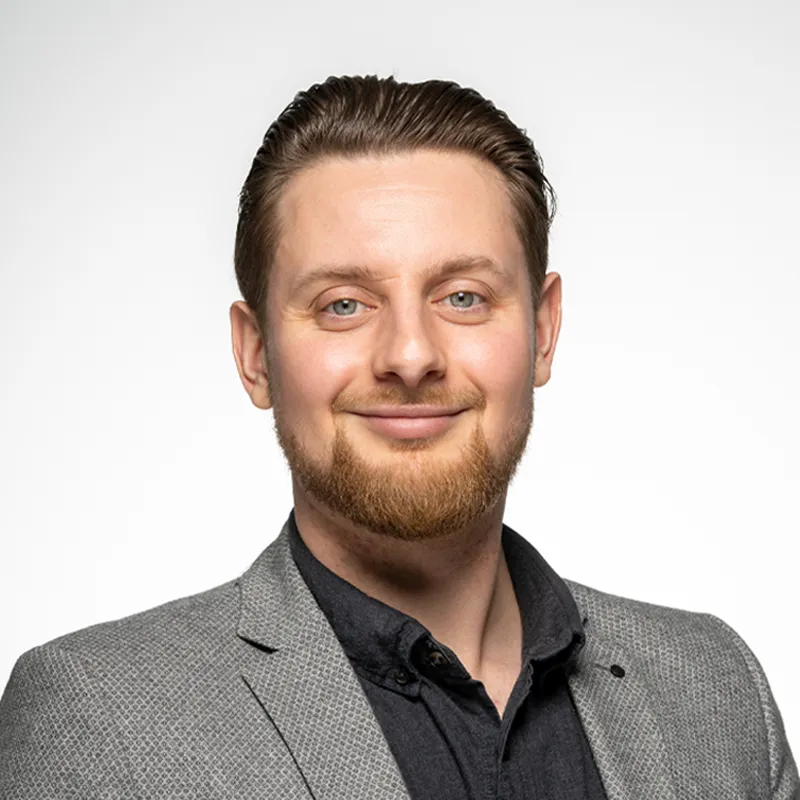
Kyle (Hogir) van de Langemheen joined the SDSC in September 2025 as a Machine Learning Engineer in the Innovation team, based in Lausanne.
Kyle holds an MSc in Artificial Intelligence from the University of Groningen. He brings several years of experience applying AI across research and industry.
Outside of his professional interests, Kyle enjoys hiking, reading, cooking, and coffee.
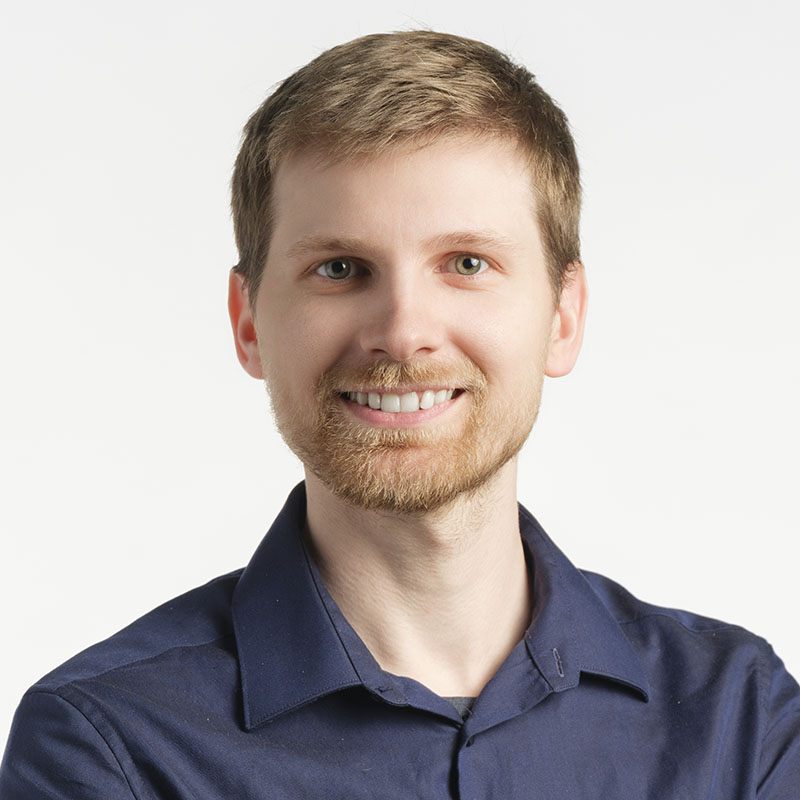
Thibaut holds a B.Sc in Computer Science from HEIG-VD. Before joining the SDSC, he worked in startups where he developped a diverse skill set combining cloud infrastructure, database and application development. Thibaut is very enthusiatic about new technologies and best coding practices and he is looking forward to supporting the team and its projects.

Ivan-Daniel joined the SDSC Innovation team in September 2022, where he works as a Data Scientist. He obtained an MSc in Robotics (2022) from EPFL and holds a BSc in Microengineering (2019), also from EPFL. His main fields of interest are Machine Learning, Computer Vision, and animal locomotion modeling.

Presentation
Large Language Models (LLMs) are increasingly used in real-world applications but designing reliable and scalable systems remains challenging. This 1-day workshop focuses on the practical development of LLM-based applications using Python. Participants explore key design patterns such as structured outputs, retrieval-augmented generation (RAG), tool integration, and agentic workflows, while also addressing engineering considerations such as evaluation, robustness, and cost control.
Main objectives
- Understand the architectural components of modern LLM-based systems (structured output, APIs, context management, tool integration, …)
- Implement structured outputs and simple agentic mechanisms in a real use case
- Evaluate LLM system performance using appropriate metrics and testing strategies
- Identify and mitigate common failure modes (hallucinations, prompt brittleness, cost inefficiencies)
- Acquire practical guidelines for moving from prototype to production-ready systems
Topics covered
LLMs, history, terminology, and concepts / Structured outputs and tool calling – enabling LLMs to interact with external systems, extract structured data, and follow precise formats / Advanced techniques & Agent design patterns – RAG, reasoning loops, multi-agent systems, routing strategies workflows / Production considerations – evaluation frameworks, cost management, debugging strategies, and fail-safe mechanisms.
Details
Prerequisites
To make the most of this course, participants should have:
• Intermediate programming skills in Python
• Basic understanding of LLM applications
Participants are required to bring their own laptop for hands-on exercises and have to make sure that they can use Renku.
Course fee*
1,000 Swiss Francs
* 10% special discount for contributing members of EPFL Alumni and EPFL VPI partners, SDSC partners, EPFL AI Center and SNAI partners.
Programme
Other events
SDSC-Connect 2023

Prof. Olivier Verscheure is the director and founder of the Swiss Data Science Center (SDSC). Olivier also co-leads a joint training program between EPFL and HEC Lausanne, specifically designed for senior executives. Since 2018, Olivier has been a member of the Board of Directors of Lonza, a global leader in the life sciences sector. This company provides products and services to the pharmaceutical, biotechnology, and specialized healthcare industries.Olivier began his career at IBM Research after earning his Ph.D. in computer science from EPFL. He held several research and leadership positions at the IBM T. J. Watson Research Center in New York and co-created and co-directed the IBM Research center in Dublin, Ireland, before joining the EPFL in 2016.

Silvia holds an MSc in Computer Science from EPFL and a PhD in Computer Science from the University of York, UK. She has been a senior research fellow at the University of Trento and later at Politecnico di Milano, Italy. Here, she had the chance to work on Marie Curie and ERC projects relating to natural language processing. From 2012 to 2019, she was a Senior Manager and NLP expert at ELCA Informatique Switzerland, whose AI department she helped create and expand. Silvia joined the Swiss Data Science Center in 2019 and is currently its Chief Transformation Officer, in charge of the team leading organizations to digital transformation.

Roberto holds an M.Sc. and a Ph.D. in Particle Physics from the University of Torino, Italy. He has worked for several years in fundamental research as a senior fellow and data scientist at the CERN Experimental Physics division and on a research project supported by the Belgian National Fund for Scientific Research (FNRS). In 2018 he moved to EPFL to work on data mining and Machine Learning techniques for the built environment and renewable energies. He has started and led multiple collaborations with academic and industry partners in the energy domain. Roberto joined the SDSC in September 2021 as a Principal Data Scientist with the mission of accompanying industries, NGOs and international organizations through their data science journey.
SDSC Hackathon

Valerio started his career working for 7 years as a particle-physics researcher at CERN. In 2016, he moved to consulting, applying data science in several industries. First, he joined the Quant team of Ernst & Young in Geneva. Later, he created his own company, SamurAI sàrl, providing consulting services for his clients. He also has a passion for teaching very complex subjects in simple terms. That is why he particularly enjoys offering training programs to private companies and universities. Valerio joined the SDSC in May 2022 as a Principal Data Scientist with the mission of accompanying industrial partners and other institutions through their data science journey.

Sean obtained his PhD in Telecommunications Engineering from Dublin City University in 2001. Since then he has worked in large industry and startup contexts but has spent most of his time working in academic research labs with a strong applied focus spanning both Ireland and Switzerland. Sean has experience with all aspects of the research project lifecycle, ranging from project inception to proposal stage to project execution and reporting. Having a keen interest in technology trends and evolution, he strives to maintain a hands on approach with practical experience with key technologies in the rapidly changing cloud and analytics technology landscape. Sean works on the Renku Infrastrucuture team, leveraging his experience with modern cloud technologies, helping to make Renku easy to deploy and manage.
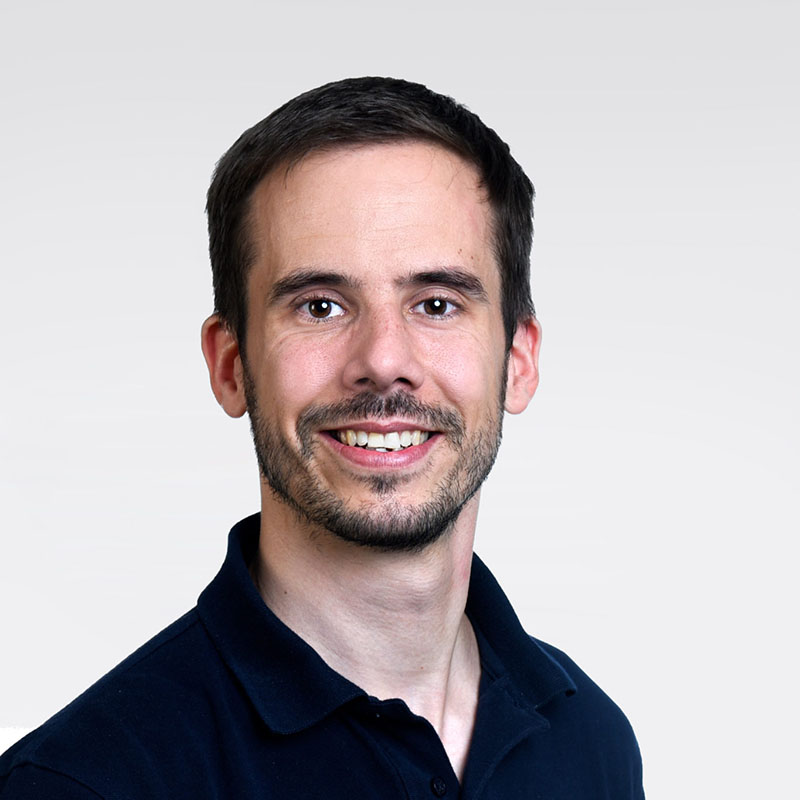
Luis is originally from Spain, where he completed his bachelor's studies in Electrical engineering, and the Ms.C. on signal theory and communications, both at the University of Seville. During his Ph.D. he started focusing on machine learning methods, more specifically message passing techniques for channel coding, and Bayesian methods for channel equalization. He carried it out between the University of Seville and the University Carlos III in Madrid, also spending some time at the EPFL, Switzerland, and Bell Labs, USA, where he worked on advanced techniques for optical channel coding. When he completed his Ph.D. in 2013, he moved to the Luxembourg Center on Systems Biomedicine, where he switched his interest to neuroscience, neuroimaging, life sciences, etc., and the application of machine learning techniques to these fields. During his 4 and a half years there as a Postdoc, he worked on many different problems as a data scientist, encompassing topics such as microscopy image analysis, neuroimaging, single-cell gene expression analysis, etc. He joined the SDSC in April 2018. As Lead Data Scientist, Luis coordinates projects in various domains. Several projects focus on the application of natural language processing and knowledge graphs to the study of different phenomena in social and political sciences. In the domains of architecture and engineering, Luis is responsible for projects centered on the application of novel generative methods to parametric modeling. Finally, Luis also coordinates different projects in robotics, ranging from collaborative robotic construction to deformable object manipulation.

Carlos Vivar Ríos joined the SDSC in 2023, where he is part of the Open Research Data and Engagement Unit (ORDES). As a multidisciplinary data engineer, he brings a diverse background in biology, cognitive sciences, and bioinformatics from the University of Malaga. His multifaceted professional career spans several disciplines, including genomics at RIKEN in Yokohama, multidimensional image analysis in microscopy at the University of Lausanne (UNIL), and cellular biology modeling at INRIA in Lyon. Carlos has been involved in a variety of projects, such as analyzing astrocyte calcium dynamics, de novo sequencing Solea senegalensis, drug repurposing for Alzheimer's based on GWAS studies, conducting geospatial analysis for linguistic corpora, and assessing drought through remote sensing. He is dedicated to advancing reproducible research methods and actively supports the open science movement.
ETH Industry Day 2023
Silvia holds an MSc in Computer Science from EPFL and a PhD in Computer Science from the University of York, UK. She has been a senior research fellow at the University of Trento and later at Politecnico di Milano, Italy. Here, she had the chance to work on Marie Curie and ERC projects relating to natural language processing. From 2012 to 2019, she was a Senior Manager and NLP expert at ELCA Informatique Switzerland, whose AI department she helped create and expand. Silvia joined the Swiss Data Science Center in 2019 and is currently its Chief Transformation Officer, in charge of the team leading organizations to digital transformation.
Contact us
Would you like to explore how we can work together?
Our team of data scientists and professionals looks forward to engaging in impactful, results-driven collaborations with you.