

SMARTT
Smart sampling for small-angle x-ray scattering Tensor Tomography

Abstract
Many materials, from human bone to carbon-fiber composites, get their strength from nanoscale structures arranged in specific orientations, like microscopic fibers all pointing a certain way. A technique called SASTT can map this hidden 3D architecture without damaging the sample, but it’s painfully slow: building a full picture requires millions of X-ray measurements and days of costly experiment time at specialized facilities, often guided by rough guesswork about how much data is actually needed.
The smarTT project will make this process “smart” by analyzing data as it’s collected and automatically deciding what to measure next and when to stop, focusing effort on the most informative angles and settings. This should make experiments much faster and more reliable, letting researchers study far more samples and expanding access to this powerful imaging method.
People
Collaborators
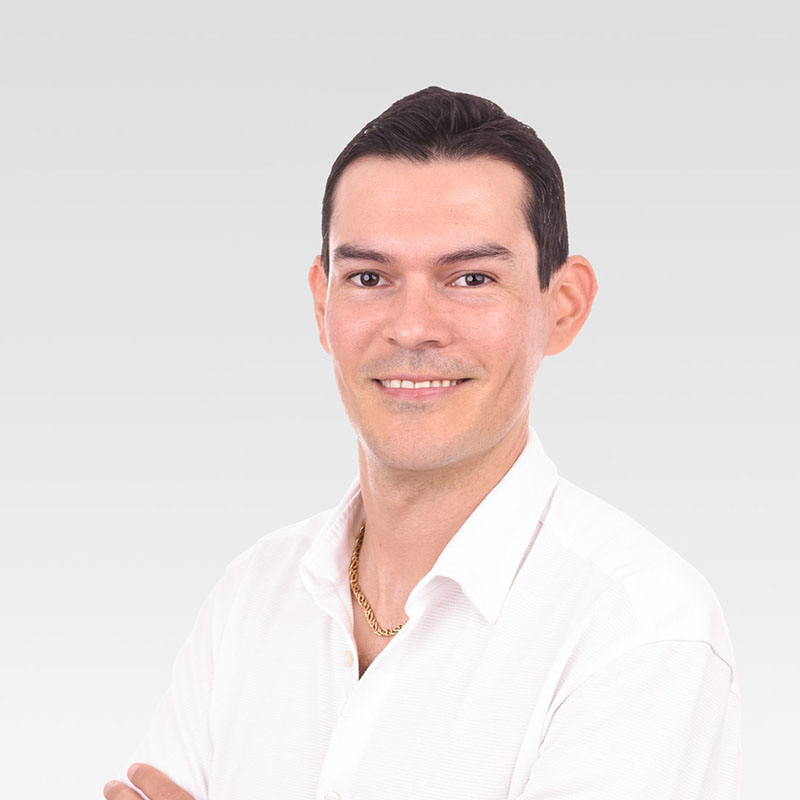
Luis Barba Flores joined the SDSC in 2022 as Senior Data Scientist. He received a joined PhD in Computers Science in 2016 from the Université Libre de Bruxelles and Carleton University. He served as a postdoctoral researcher at ETH Zurich from 2016 to 2019, and then moved to EPFL Lausanne to work in the Machine Learning and Optimization Group until 2022. His research interests include distributed optimization algorithms, first-order optimization methods and their applications to Deep Learning models.


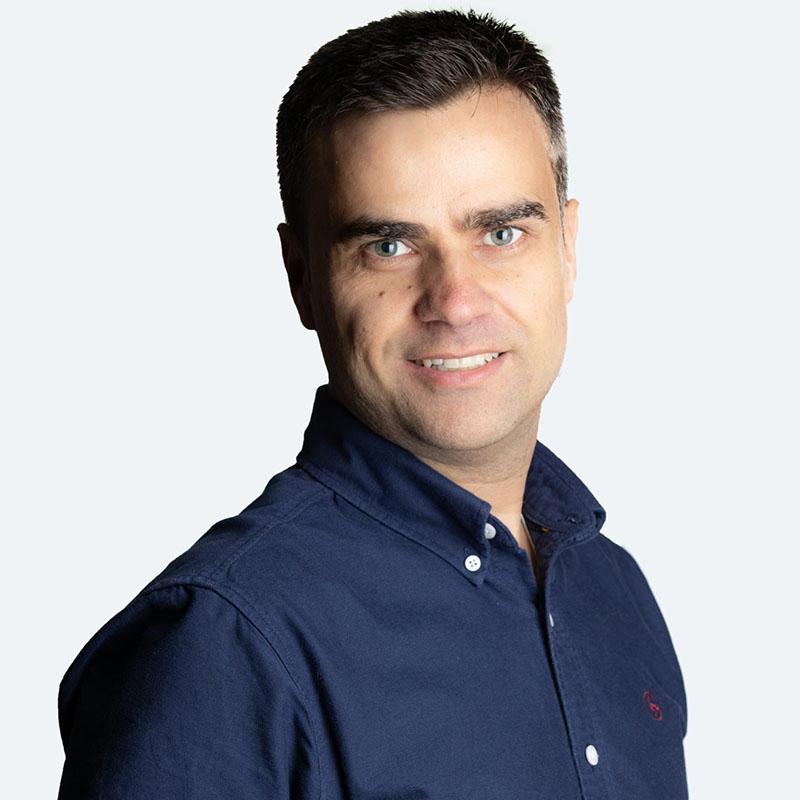
Benjamín Béjar received a PhD in Electrical Engineering from Universidad Politécnica de Madrid in 2012. He served as a postdoctoral fellow at École Polytechnique Fédérale de Lausanne until 2017, and then he moved to Johns Hopkins University where he held a Research Faculty position until Dec. 2019. His research interests lie at the intersection of signal processing and machine learning methods, and he has worked on topics such as sparse signal recovery, time-series analysis, and computer vision methods with special emphasis on biomedical applications. Since 2021, Benjamin leads the SDSC office at the Paul Scherrer Institute in Villigen. Since 2025, he serves as Domain Lead for Large-Scale Scientific Infrastructures.
PI | Partners:
description
Motivation
Small-angle X-ray scattering tensor tomography (SASTT) is a cutting-edge imaging technique that enables the non-destructive examination of nanostructures within three-dimensional (3D) macroscopic samples. Renowned for its ability to probe hierarchical structures, SASTT provides detailed insights into nanoscale features such as orientation and composition in diverse materials, including biological tissues and industrial composites. This technique involves collecting millions of scattering patterns to reconstruct the 3D structure and orientation of nanostructures. However, the process is currently resource-intensive, requiring extensive synchrotron beamtime and prolonged measurement periods, which significantly hampers its accessibility and scalability.
The smart sampling for small-angle X-ray scattering Tensor Tomography (smarTT) project is driven by the urgent need to optimize the data acquisition process in SASTT. Presently, data collection relies on empirical rules of thumb, leading to inefficiencies such as oversampling or undersampling. These inefficiencies not only squander valuable synchrotron beamtime but also increase the risk of radiation damage to samples. With growing demands for high-resolution, high-throughput analyses in fields such as biomedical research and industrial materials science, there is a critical need to make SASTT faster, more resource-efficient, and broadly accessible.
The primary aim of the smarTT project is to transform the SASTT workflow by integrating advanced data science and machine learning techniques to enable smart, data-driven sampling strategies. This will optimize synchrotron beamtime utilization, mitigate radiation damage risks, and significantly enhance the overall efficiency of the technique.

Figure 1: (a) raster scanning the full sample in x and y to obtain one projection, (b) recording one scattering pattern in each point. (c and e) 8000 SAXS pattern are measured per projection. (f) Based on an empirical rule of thumb 307 projections (red full circles) are measured in each rotation around two axis, α and β. The data suffer from a missing wedge (blue open circles) and a full sampling according to an extended Crowther criterion (black open circle) would be unfeasible.
Proposed Approach
The project is structured into three core work packages:
- Online Reconstruction:
The development of an online reconstruction algorithm will provide real-time feedback during data acquisition. This will allow adjustments to the scanning process based on the data being collected, ensuring that sampling stops once sufficient information has been gathered. This iterative approach will enhance efficiency and reduce redundancy.
- Smart Sampling of Projections:
By applying data-driven approaches, the project aims to optimize projection sampling, focusing on the most informative angles and orientations. For samples with known structural characteristics—such as carbon-fiber composites or layered biological tissues—this strategy will concentrate data collection on projections that yield the richest structural insights, reducing unnecessary sampling.
- Smart Sampling Within Projections:
Efficiency in raster scanning within each projection will be enhanced by dynamically adjusting step sizes and exposure times based on real-time analysis. These adjustments will maintain an optimal signal-to-noise ratio while minimizing radiation damage, particularly for sensitive biological samples and heterogenous materials.
By addressing the key challenges of inefficiency and accessibility, the smarTT project is poised to revolutionize SASTT, enabling its broader application in statistically significant biomedical studies and industrial material assessments. This effort will directly benefit synchrotron facilities, researchers, and industries globally, fostering advancements in fields reliant on detailed structural characterization.
Presentation
Gallery
Annexe
Additional resources
Bibliography
- Liebi, M. et al. Nanostructure surveys of macroscopic specimens by small-angle scattering tensor tomography. Nature 527, 349–352 (2015).
- Schaff, F. et al. Six-dimensional real and reciprocal space small-angle X-ray scattering tomography. Nature 527, 353–356 (2015).
- Grünewald, T. A. T. A. et al. Mapping the 3D orientation of nanocrystals and nanostructures in human bone: Indications of novel structural features. Sci. Adv. 6, eaba4171 (2020).
- Nielsen, L. C., Erhart, P., Guizar-Sicairos, M. & Liebi, M. Small-angle scattering tensor tomography algorithm for robust reconstruction of complex textures. 515–526 (2023) doi:10.1107/S205327332300863X.
- Liebi, M. et al. Small-angle X-ray scattering tensor tomography: Model of the three-dimensional reciprocal-space map, reconstruction algorithm and angular sampling requirements. Acta Crystallogr. Sect. A Found. Adv. 74, 12–24 (2018).
- Nielsen, L. C., Tänzer, T., Rodriguez-Fernandez, I., Erhart, P. & Liebi, M. Investigating the missing wedge problem in small-angle x-ray scattering tensor tomography across real and reciprocal space. 1–13 (2024) doi:10.1107/S1600577524006702.
- Leonarski, F. et al. Jungfraujoch: hardware-accelerated data-acquisition system for kilohertz pixel-array X-ray detectors. J. Synchrotron Radiat. 30, 227–234 (2023).
- Nielsen, L., Erhart, P. & Liebi, M. Simulated data set for SAXS tensor tomography, sample ‘M’. (2022) doi:10.5281/zenodo.7326784.
Publications
Related Pages
More projects

TGSF-DA

MOBIKO

SCOPE

I-DEEP-TRUST
More projects
News
Latest news
12 Zurich SMEs join next AI Innovation Program
12 Zurich SMEs join next AI Innovation Program

La science des données au service de la neutralité carbone du canton : ENERBAT ouvre la voie
La science des données au service de la neutralité carbone du canton : ENERBAT ouvre la voie

The SDSC to support 31 projects through its second National Calls
The SDSC to support 31 projects through its second National Calls
Contact us
Would you like to explore how we can work together?
Our team of data scientists and professionals looks forward to engaging in impactful, results-driven collaborations with you.