SDSC-Connect: Connecting Data for Environmental Sciences
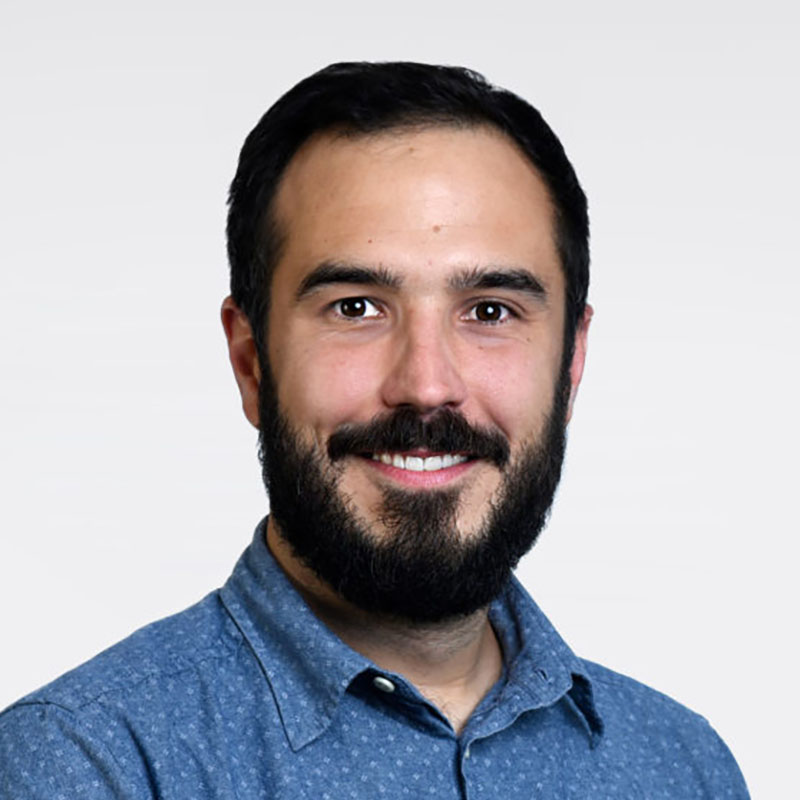
Michele received a Ph.D. in Environmental Sciences from the University of Lausanne (Switzerland) in 2013. He was then a visiting postdoc in the CALVIN group, Institute of Perception, Action and Behaviour of the School of Informatics at the University of Edinburgh, Scotland (2014-2016). He then joined the Multimodal Remote Sensing and the Geocomputation groups at the Geography department of the University of Zurich, Switzerland (2016-2017). His main research activities were at the interface of computer vision, machine and deep learning for the extraction of information from aerial photos, satellite optical images and geospatial data in general.


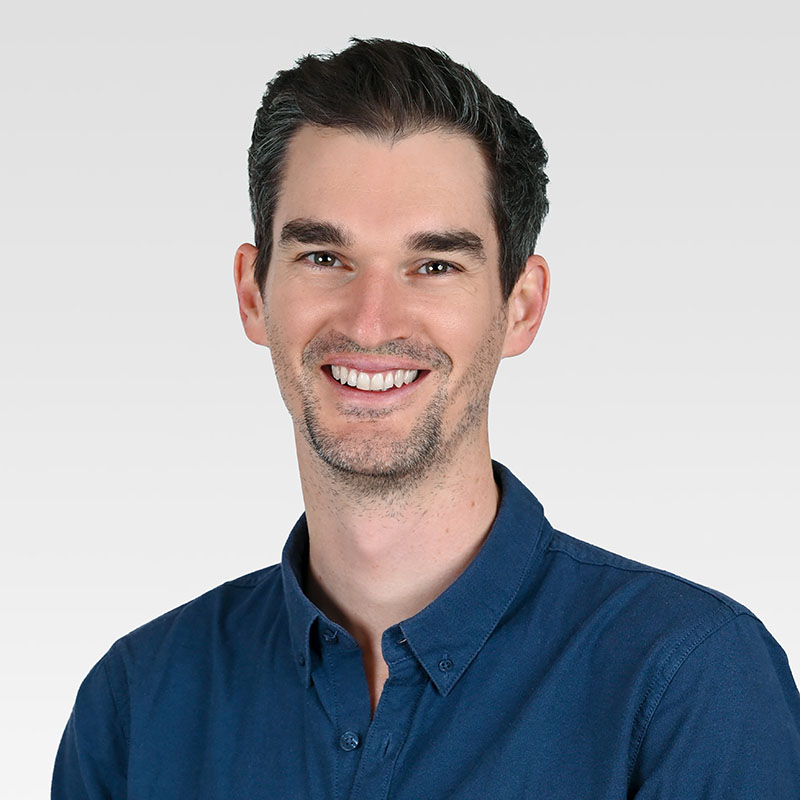
Luke completed his PhD in oceanography at the University of Cape Town in 2017.
After a short stint at the Council for Scientific and Industrial Research in Cape Town, he joined the Environmental Physics group at ETH Zürich as a postdoc in 2019. Here, his research focussed on ocean biogeochemistry. Specifically, he used machine learning approaches to estimate surface ocean pH and surface ocean carbon fluxes from satellite and ship-based observations.
Luke has also been involved developing scientific data processing tools for several autonomous observation platforms.
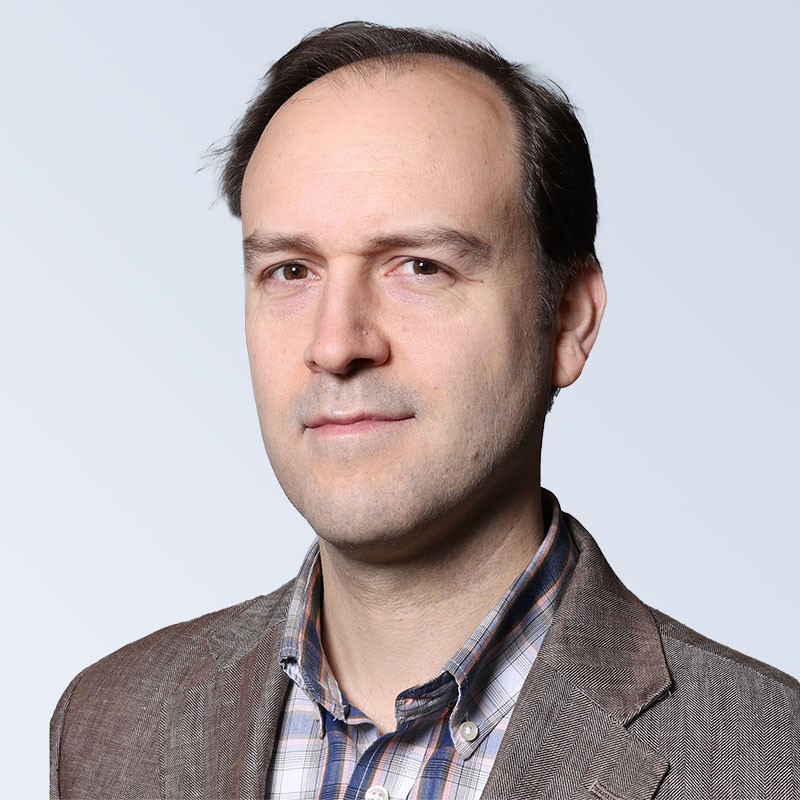
Guillaume Obozinski graduated with a PhD in Statistics from UC Berkeley in 2009. He did his postdoc and held until 2012 a researcher position in the Willow and Sierra teams at INRIA and Ecole Normale Supérieure in Paris. He was then Research Faculty at Ecole des Ponts ParisTech until 2018. Guillaume has broad interests in statistics and machine learning and worked over time on sparse modeling, optimization for large scale learning, graphical models, relational learning and semantic embeddings, with applications in various domains from computational biology to computer vision.

Uta joined SDSC in May 2024 as Head of Communications & Events. Prior to that, she held various business communication management roles in technology-driven companies in material and life sciences, information and telecommunications as well as automotive industries. Her specialty is to transform complex messages into simple stories to help organizations reach key audiences with relevant and compelling contents, leveraging media and digital channels.Uta holds a Master of Arts from Humboldt University of Berlin, a Master of Business Administration from La Salle University, Philadelphia, and a graduate certificate in Sustainability Leadership from Cambridge University. In her free time she enjoys sports and traveling with her husband and two sons.

Marisol has a degree in Law and more than 15 years of experience working as a notary officer in Madrid. After relocating to Switzerland with her family, she obtained a certification to teach Spanish as a foreign language, dedicating four years to teaching Spanish online to students of all ages and backgrounds. Marisol has returned to her professional roots as an administrative assistant, joining the SDSC team in June 2023.
Presentation
What are the main barriers to accessing and using environmental data? And how can we build a more interoperable, accessible data ecosystem modeling for the environmental sciences community?
This SDSC-Connect conference and workshop brings together researchers and practitioners in Environmental and Data Science to address one of the field's biggest challenges: connecting complex environmental data and models across disciplines, institutions, and infrastructures.
Through keynote talks and interactive workshops, participants will exchange knowledge and develop a shared perspective on the future of environmental data in Switzerland and beyond.
Topics covered during the event will include climate and atmospheric sciences, ecology and biodiversity, hydrology, cryosphere, natural hazards, and agriculture.
Discussions will explore:
- Critical datasets: Which environmental datasets are essential but remain difficult to access?
- Data use across research domains: How can scientists more effectively discover, ingest, and reuse environmental data across disciplines? What value can data science bring to the equation?
- Data infrastructure: What is needed to improve data access, interoperability, standards, and tools?
Designed by the Swiss Data Science Center (SDSC), this event is intended for the Environmental sciences community across Switzerland, including but not limited to researchers, data scientists, experts and practitioners from universities, the four research institutes of the ETH Domain and the public sector.
What participants will take away
- Contribute to the Environmental sciences community coming together to develop a common view on data approaches in the fragmented domain
- Learn about larger nationwide Environmental data science initiatives
- Participate in scientific exchange on most common data science topics in Environmental sciences
- Gain an understanding how the Swiss Data Science Center (SDSC) can support Environmental sciences
Who should attend?
- All Environmental scientists across Switzerland
- Data Scientists active in Environmental Research
- Stakeholders and practitioners interested in the topic
Details
SDSC-Connect: Connecting Data for Environmental Sciences
Date: 03.02.2027
Time: 09:00 - 16:30
Location: Bern (central place tba)
Registration fee: 50 CHF (to cover meals, refreshments)
Registration required. Seats are limited.
Programme
(Preliminary agenda, more details being revealed soon)
09:00 Welcome Coffee
09:30 Introductions & Keynotes
11:00 Coffee Break & Networking
11:30 Invited Talks
12:30 Lunch
14:00 Break-out sessions | Poster fair | Coffee & Networking
16:00 Closing & Farewell apéro
16:30 End of event
Other events

AMLD Workshop Generative AI for Forward and Inverse Design in Architecture and Engineering
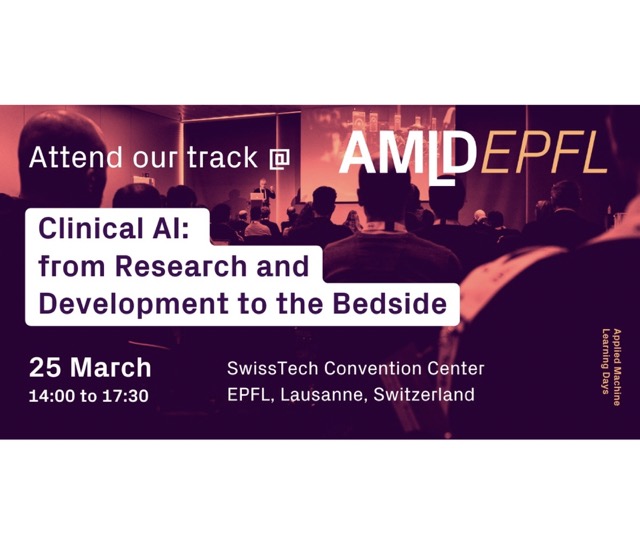
AMLD 2024 | Clinical AI: from Research and Development to the Bed Side
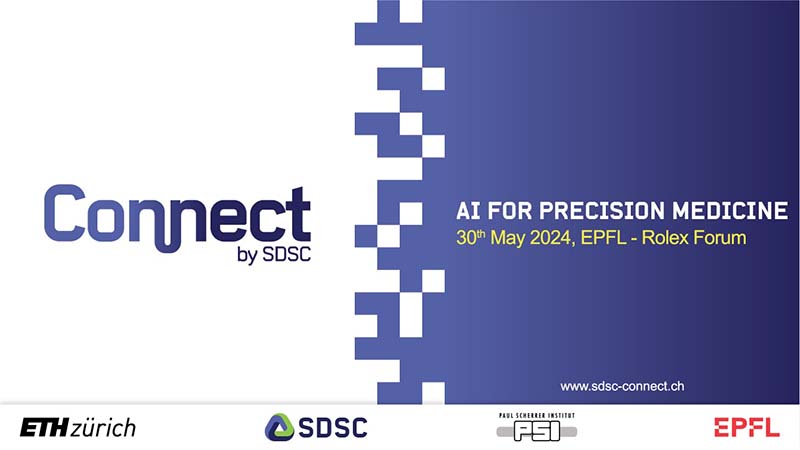
SDSC-Connect | AI for Precision Medicine
Synthetic Data for Biomedical Applications

Before joining SDSC, Arshjot Khehra received his MSc in Artificial Intelligence from USI Lugano, where he completed his thesis on hierarchical graph reinforcement learning. Previously, he worked for 4+ years across India and Singapore gaining data science experience in insurance, logistics, and manufacturing sectors. He also holds a BSc in Industrial Engineering from PEC Chandigarh. Over the course of his career, Arshjot worked on a wide array of projects, such as, handwritten text recognition and generation, voice matching across phone call recordings, policy lapse rate prediction for customer retention, and automated insurance claim processing.

Matthias Galipaud obtained his PhD in evolutionary biology in 2012 from the University of Burgundy in Dijon (France), and held postdoctoral positions as a mathematical biologist at the university of Bielefeld (Germany) and the university of Zurich, where he researched the evolutionary theories of aging and mate choice. In 2020, he became a data scientist, developing machine learning solutions for startups in Switzerland and Australia before joining the SDSC Innovation Team in November 2022.

Valerio started his career working for 7 years as a particle-physics researcher at CERN. In 2016, he moved to consulting, applying data science in several industries. First, he joined the Quant team of Ernst & Young in Geneva. Later, he created his own company, SamurAI sàrl, providing consulting services for his clients. He also has a passion for teaching very complex subjects in simple terms. That is why he particularly enjoys offering training programs to private companies and universities. Valerio joined the SDSC in May 2022 as a Principal Data Scientist with the mission of accompanying industrial partners and other institutions through their data science journey.
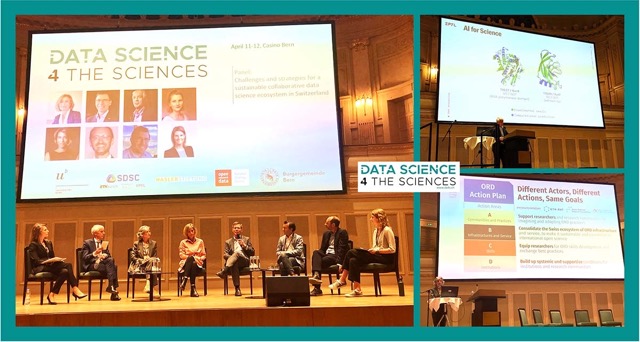
Data Science for the Sciences
Guillaume Obozinski graduated with a PhD in Statistics from UC Berkeley in 2009. He did his postdoc and held until 2012 a researcher position in the Willow and Sierra teams at INRIA and Ecole Normale Supérieure in Paris. He was then Research Faculty at Ecole des Ponts ParisTech until 2018. Guillaume has broad interests in statistics and machine learning and worked over time on sparse modeling, optimization for large scale learning, graphical models, relational learning and semantic embeddings, with applications in various domains from computational biology to computer vision.
ENID | Enabling Innovation with Data Science at UNIL-EPFL

Prof. Olivier Verscheure is the director and founder of the Swiss Data Science Center (SDSC). Olivier also co-leads a joint training program between EPFL and HEC Lausanne, specifically designed for senior executives. Since 2018, Olivier has been a member of the Board of Directors of Lonza, a global leader in the life sciences sector. This company provides products and services to the pharmaceutical, biotechnology, and specialized healthcare industries.Olivier began his career at IBM Research after earning his Ph.D. in computer science from EPFL. He held several research and leadership positions at the IBM T. J. Watson Research Center in New York and co-created and co-directed the IBM Research center in Dublin, Ireland, before joining the EPFL in 2016.
Matthias Galipaud obtained his PhD in evolutionary biology in 2012 from the University of Burgundy in Dijon (France), and held postdoctoral positions as a mathematical biologist at the university of Bielefeld (Germany) and the university of Zurich, where he researched the evolutionary theories of aging and mate choice. In 2020, he became a data scientist, developing machine learning solutions for startups in Switzerland and Australia before joining the SDSC Innovation Team in November 2022.

Olivier joined the SDSC as a data scientist focused on industry collaborations in February 2023. He obtained a MSc in Physics (2017) from EPFL with a minor in Mathematics, and a PhD in Astrophysics (2021) from Aix-Marseille University. Before joining the SDSC, he worked in a small start-up, as a data scientist, on a variety of topics, including data wrangling, natural language processing and time series forecasting.
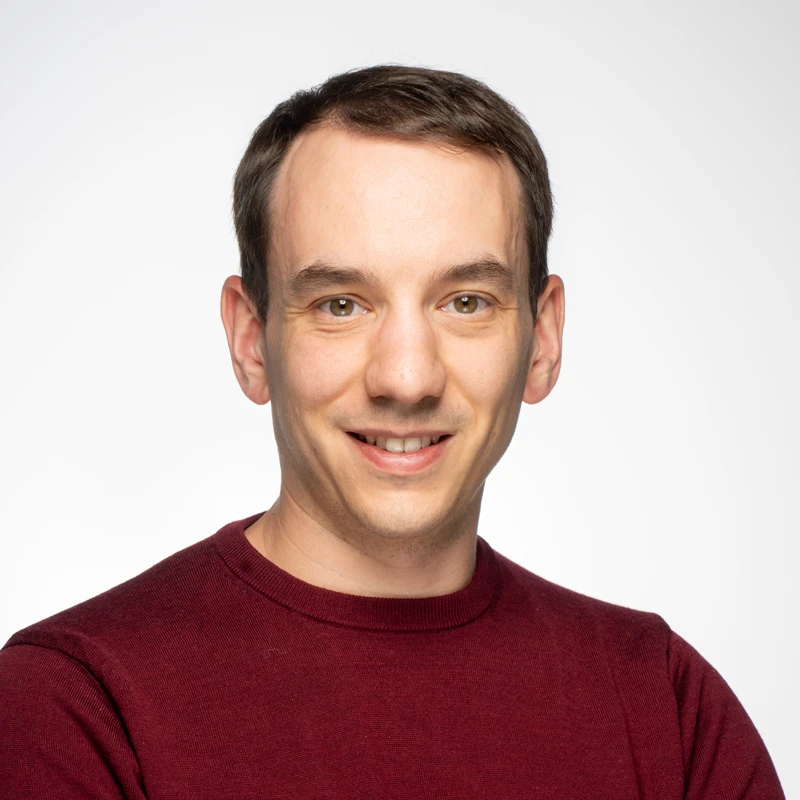
Clément Lefeebvre joined the SDSC in January 2019 as a Data Scientist with an emphasis on industry-oriented projects in the Innovation team, based in Lausanne.
He holds a Bachelor of Science degree in Physics, acquired in 2016 from the École Polytechnique Fédérale de Lausanne (EPFL) in Switzerland. Following this, he earned a Master of Science in Computational Science and Engineering in 2018, also from EPFL. Throughout his academic journey, Clément concentrated on leveraging Data Science and Machine Learning techniques to enhance efficiency in industrial processes. Subsequently, he developed a specialized interest in Generative AI, with a particular focus on Natural Language Processing (NLP), especially in the application of Large Language Models for innovation.
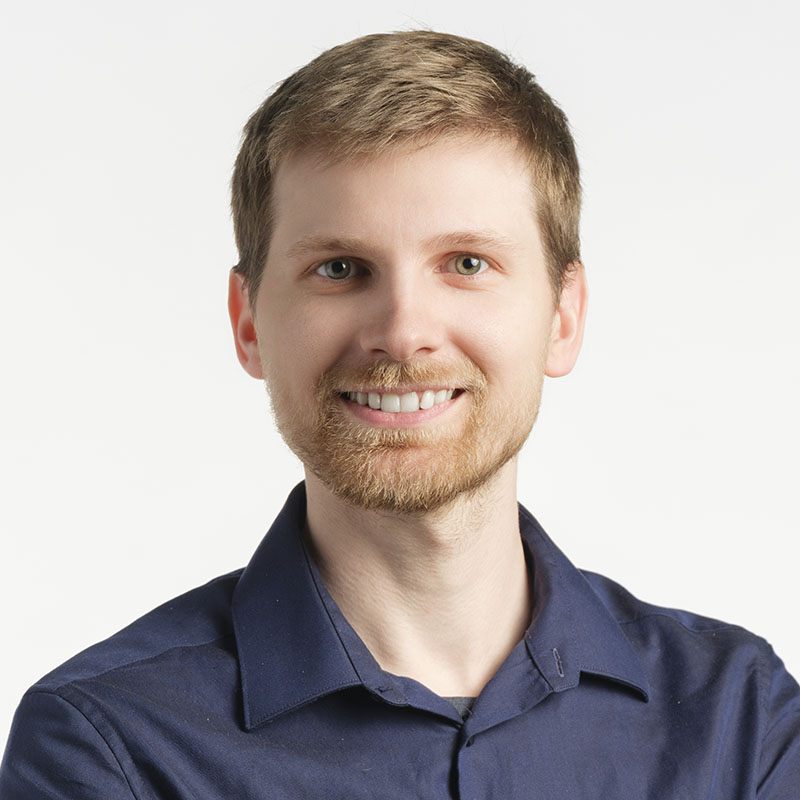
Thibaut holds a B.Sc in Computer Science from HEIG-VD. Before joining the SDSC, he worked in startups where he developped a diverse skill set combining cloud infrastructure, database and application development. Thibaut is very enthusiatic about new technologies and best coding practices and he is looking forward to supporting the team and its projects.
Contact us
Would you like to explore how we can work together?
Our team of data scientists and professionals looks forward to engaging in impactful, results-driven collaborations with you.