

LUCID National Data Stream
Low Value of Care in Medical Hospitalized Patients - a National Data Stream on Quality of Care in Swiss University Hospitals
Abstract
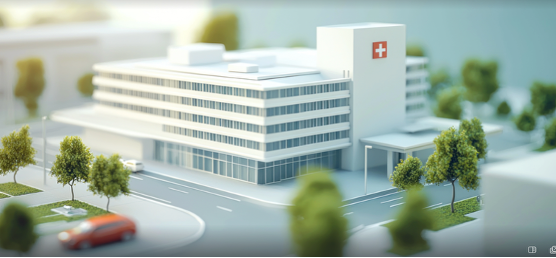
The LUCID (Low Value of Care in Hospitalized Patients) National Data Stream aims to improve hospital quality of care in Switzerland by monitoring and reducing unnecessary low value care procedures. Guided by value-driven, patient-centered, and evidence-based healthcare principles it connects the five Swiss university hospitals through a secure data infrastructure. The project analyzes routinely collected hospital data and a subset of roughly 1000 Patient Reported Outcomes (PROs) to improve care efficiency and quality, initially focusing on medical inpatients, with a framework adaptable to other hospital specialties.
This project has been funded by SPHN and PHRT from 2022 to 2025 with equal in-kind contribution from SDSC and participating hospitals (CHUV; HUG; USB; USZ; Inselspital).



People
Collaborators
Guillaume Obozinski graduated with a PhD in Statistics from UC Berkeley in 2009. He did his postdoc and held until 2012 a researcher position in the Willow and Sierra teams at INRIA and Ecole Normale Supérieure in Paris. He was then Research Faculty at Ecole des Ponts ParisTech until 2018. Guillaume has broad interests in statistics and machine learning and worked over time on sparse modeling, optimization for large scale learning, graphical models, relational learning and semantic embeddings, with applications in various domains from computational biology to computer vision.


Oksana is a disruptive innovator bringing her positive energy to projects. Driven by her curiosity and can-do attitude she excels in industrial and academic contexts. Oksana earned her PhD in Life Sciences and Bioinformatics from the University of Lausanne after two MSc in Bioinformatics and in Information Systems from the University of Geneva. For more than 10 years, she has been committed to actively promoting the value of data science and advocating the best practices for reproducible and ethical research. She believes that Swiss Data Science Center is a key player in building a competitive data economy in Switzerland leveraging its innovative potential and renown commitment to quality.

Stefan has a background in Biology and decided to move towards evolutionary bioinformatics for both his MSc and PhD.Over the years, he developed a passion for the entire data analysis process: from collecting data, to analyzing and presenting results. Presentations, particularly opportunities for public speaking, are activities he enjoys since he values communication a lot. In order to follow this passion and deepen his knowledge on systems to collect and manage data, he joined SDSC in 2023 as a Biomedical Data Engineer.Outside work, Stefan is an avid reader of sci-fi books (but not only!), enjoys swimming, running, and biking both competitively and casually and enjoys plenty of activities with friends, especially when beer is involved.
Cyril joined the SDSC in 2022 as a Senior Data Science Engineer in the Infrastructure team, based in Lausanne.
He holds a Ph.D. in computational biology from Sorbonne University and the Institut Pasteur in Paris. There, he developed tools to detect changes in the 3D conformation of chromosomes and analyzed how it is altered during infection by bacterial pathogens. Before that, he received an MSc. in Bioinformatics from the University of Lausanne, where he worked on evolutionary genomics in insects. Over time, Cyril developed a strong interest in open and transparent scientific research. He is eager to promote good software and data management practice in research.

Hannah Casey is joining the ORDES team as Front-End Research Engineer after obtaining her BSc in Computer Science and MSc in Digital Humanities, both at EPFL. During her studies, she completed internships at the Bibliotheca Hertziana – Max Planck Institute for Art History in Rome and the National Institute of Informatics in Tokyo, focusing on data visualisation and analysis of cultural collections. Her work reflects a passion for interdisciplinary collaboration, merging her love for art and culture with her expertise in computer science.
Hannah has a keen interest in design thinking and user experience, aiming to create intuitive and visually engaging tools. Outside of work, she enjoys staying active as a member of a volleyball team and exploring the outdoors through hiking.

Robin joined the SDSC in 2022. He received an MSc. in Management, Economics & Consumer Studies from the University of Wageningen in the Netherlands. After his studies, he developed himself into a consultant in the area of ontology & linked data modelling, working mostly in the domain of local and national infrastructure projects. He has a great interest in standardization efforts in the field of semantic web technology standards and is actively working at SDSC with clients and collaborators to stimulate their adoption.

Alessandro holds an M.Sc. in Applied Mathematics from EPFL with a minor in Data Science. After his studies, he joined the SDSC as Data Scientist in April 2022, where he closely works with the academic community to enlarge and support the use of data science. Over the years he worked on a variety of topics, from extreme events modeling to time series representation. His main interest lies in the application of machine learning to the energy sector.

Federico holds a M.Sc. in Engineering and a Ph.D. in Sustainable Development and Innovation Engineering. After a three-year Postdoc in Environmental Data Mining at the University of Lausanne, in 2021 he joined the Swiss Data Science Centre, where he now works as Principal Data Scientist supporting the acceleration of the digital transformation within industries, NGOs and public bodies. Over the years he worked on the development of methodological tools to mine and model big spatiotemporal datasets. He has deep competencies in applied statistics, machine learning, geocomputation, spatial statistics, remote sensing.

David joined SDSC in February 2024. Before that, he completed his doctorate in computer vision at ETH Zürich. His doctoral thesis focused on multi-task learning and domain adaptation in neural networks for applications in visual recognition. In addition, he gained research experience in transfer learning and multi-modal learning. David’s current work at SDSC ranges from large-scale vegetation modeling based on satellite imaging to analysis of electronic health records with deep learning methods.

Paul joined the SCSC in July 2023. He received a PhD in Computer Science from EPFL, focusing on sampling and optimisation algorithms, Causality, robust Machine Learning and Reinforcement Learning. Prior to his PhD, he obtained a Bachelor degree in Physics and a Master in Computational Science and Engineering at EPFL. During his studies, he focused on the numerical integration of Ordinary and Stochastic differential equations, in addition to Machine Learning.

Jimena joined SDSC as Frontend designer in November 2022. She is an all-round creative graphic designer with in-depth knowledge of typography, branding, user interface & user experience. Her job at Renku include close collaboration with the product manager, developers and engineers to gather requirements from users before designing ideas that can be communicated using storyboards, process flows, sitemaps, personas, sketches, wireframes, mockups, prototypes and user test. She combines design, creativity and new technologies with focus on solving problems for the end-user and creating user-friendly interfaces according to GUIs.

Almut Lütge joined the ORDES team in Zurich as Biomedical Data Engineer, in January 2024.
Almut did both her Bachelor and Master in molecular biotechnology with a major in bioinformatics at the University of Heidelberg in Germany.
After her masters she worked as a research assistant on population genetics at the NTNU in Trondheim, Norway.
In 2018 Almut started her PhD about benchmarking of single cell analysis tools at the University of Zürich, followed by a short PostDoc in pharmaceutical immunology at ETH Zürich.
Almut enjoys data-driven problem-solving and highly value open science.

Martin joined the SDSC in October 2019 to work on the Swiss Data Custodian project as a computer scientist.
He obtained a BSc and a MSc in Communication Systems from EPFL. His great interest for Cyber security led him to specialize in Information Security and Privacy during his master. At the end of his studies, he did an internship where he coupled machine learning and security to develop a tool to automatically analyze log files and detect behavioural anomalies. After that, he came back to EPFL for his master thesis, where he investigated Website Fingerprinting, an attack aiming at breaking the privacy of Tor and other encrypted and anonymous networks.

Gabriel Nützi is joining the ORDES team as Senior Software Research and Development Engineer. During his MSc and PhD at ETH Zurich, Gabriel conducted research in non-smooth granular dynamics, focusing on high-performance computing in C++. He has several years of experience in the medical field, where he developed geometrical algorithms for dental CAD systems and contributed significantly to CI/CD, build systems, and containerization for micro-service cloud architectures. Gabriel is passionate about open-source software and actively contributes to several projects. He enjoys tackling complex technical challenges and promoting best practices, efficient workflows, and new technologies. Sharing knowledge and continually expanding his expertise in modern programming languages such as Rust and Go, as well as innovative operating systems like NixOS, is a daily passion for him. In his leisure time, Gabriel enjoys climbing, wind-surfing, pump-foiling, biking, and composing music.

Luana Martelli worked as a Security Expert for the ORDES / Infrastructure team. After completing her M.Sc. in IT security at the HES-SO, Luana worked a few years in the industry as a consultant, doing security assessment for companies. She has a great interest in programming and cryptography.
PI | Partners:
Main PIs
Dr. med. Marie Méan (CHUV)
Prof. Dr. Guillaume Obozinski (SDSC)
Project consortium (in 2025)
Prof. Dr. med. Christian Lovis (UniGE/HUG),
Prof. Dr. Jean Louis Raisaro (CHUV),
Prof. Dr. med. Drahomir Aujesky (Inselspital),
Prof. Dr. med. Stefano Bassetti (USB),
Prof. Dr. med. Christophe Meier (USZ),
Dr. med. Jerome Stirnemann (HUG),
Prof. Dr. med. Alexander Leichtle (Inselspital),
Prof. Dr. med. Carole Aubert (Inselspital),
Prof. Dr. med. Florence Vallelian (USZ),
Dr. Bram Stieltjes (USB),
Dr. Oksana Riba-Grognuz (SDSC),
Dr. med. Florian Rüter (USB),
Prof. Dr. Manuela Eicher (CHUV),
Prof. Dr. med. Dr. Phil. Arnaud Chiolero (UniFr),
Jérémie Despraz (CHUV)
Project manager
Dr. Jean Regina (CHUV)
Data managers
Dr. Stefan Milosavljevic (SDSC)
Dr. Cyril Matthey-Doret (SDSC)
Patient partners
Beat Meyer
Ute Studer
Ursula Ganz-Blätter
Michael Laurac
description
Motivation
National Data Streams, a joint program of the Personalized Health and Related Technologies (PHRT) and the Swiss Personalized Health Network (SPHN), play an important role in making Swiss health-related data compliant with the FAIR principles. [1]
The LUCID National Data Stream focuses on hospital inpatient quality of care and aims to find ways of improving healthcare processes in Swiss hospitals. As both the number of patients and the cost of acute care are expected to increase in the future, promoting the most efficient practices and an optimal use of resources is key for the Swiss healthcare system to evolve.
For more effective, cost-efficient, data-driven, and evidence-based care, an important aspect is to avoid low-value care, which refers to clinical practices that provide little or no benefit to the patient, incur unnecessary costs, and may cause harm. Examples include prescribing sedatives to hospitalized older patients for sleep despite increased fall risk or routinely measuring vital signs at night when not clinically necessary, thereby disrupting sleep.
Objectives
The overarching scope of LUCID NDS is to improve quality of care, and the project is running in 2 phases: First phase 2022-2025; Second Phase 2026-2028.
Thus, the LUCID initial project (2022-2026) investigated trends in Swiss clinical practice and low-value care over the past decade, focusing on the impact of the 2016 Smarter Medicine recommendations and consequences of low value care.
In the future, the LUCID NDS aims to establish a sustainable national registry to support future research on quality of care in Switzerland. The registry is already enabling several projects, including the development of machine learning models for hospital length of stay estimation in a collaboration between the SDSC and Prof. Jean Louis Raisaro’s team at CHUV.
Data flow and infrastructure
The NDS collects harmonized clinical from consenting patients hospitalized in Switzerland’s five university hospitals: University Hospital Zurich (USZ), University Hospital Basel (USB), Inselspital Bern, Lausanne University Hospital ( CHUV) and Geneva University Hospital (HUG). The data consists of routinely collected hospital information (which includes, patient demographics, medical history, diagnoses, lab tests, and administrative data generated during regular care).
A subset of Patient Reported Outcomes (PROs) which convey information on the health status as perceived by the patient are also available, however this is not yet routinely collected data in most of the hospitals.
All data are integrated into a dedicated medical registry that forms the basis for developing and analyzing indicators of low-value care and study further projects on quality of care.
SDSC contributions
1. Building a robust data infrastructure and management framework
The current dataset comprises nearly 300’000 hospital stays from the five Swiss university hospitals, spanning 2014 to 2024. Preparing this data for research analysis requires substantial preliminary work. As a first step, the incoming data must be harmonized according to predefined semantic standards.
The LUCID data infrastructure is hosted on the BioMedIT platform developed together with SPHN, and uses data transfer protocols, a data model, and a Resource Description Framework (RDF) encoding schema provided by the SPHN Data Coordination Center (DCC).
In close collaboration with SPHN, the DCC, and the IT units of the five university hospitals, the SDSC has established the operational data stream. SDSC data science engineers laid out the technical and governance foundations for the LUCID medical registry, including:
Trusted Architecture & Data Governance
- Configuration of a two-tier architecture that separates registry operations from research, with isolated environments and additional de-identification for each project.
- Processes for patient consent management, supported by automated workflows to remove data in case of consent withdrawal.
- Procedures enabling digitalized data access request handling via a Data Access Committee (DAC) Portal developed by SDSC.
Interoperable, Reusable Datasets with Quality Guarantees
- Production-grade ingestion pipelines enabling secure, FAIR-aligned data flows from five Swiss university hospitals (DOI:10.5281/zenodo.14726408)
- Semantic data validation and a fast, secure pseudonymization pipeline applied to RDF graphs, supporting interoperable and privacy-preserving data structures.
- Pipelines generating AI-ready tabular datasets, enriched with statistical outlier detection and data quality checks developed by SDSC data scientists.
Value Creation for Hospitals and Patients
- Feedback loops returning data quality insights to hospitals.
- Active involvement of patients in co-creating the LUCID website to ensure it reflects their needs and real experiences.
- Dashboard (work in progress).
- Website: www.LUCID-nds.ch
2. Measuring low-value care through clinical practice data
SDSC data scientists have been working closely with the CHUV researchers and clinicians to jointly define numerical low value care (LVC) indicators that quantify care procedures deviating from the recommended best practices.
The analysis of LVC trends helps to shed light on how care practices have evolved over time across Switzerland’s university hospitals, to assess the long-term impact of the 2016 Smarter Medicine campaign, and to identify opportunities for further improvement in clinical practice.
Statistical analyses are shared with the Clinical Trial Unit (CTU) at the Department of Clinical Research (DCR) of the University of Bern.
Significance | Impact
Reducing low value care is a major yet untapped opportunity to improve healthcare outcomes and efficiency at a given cost while reducing unnecessary and even risky practices.
The LUCID NDS has established a nationwide system to document and analyze the trends in low value care among hospitalized patients. By comparing data from before and after the best practice recommendations, the project will evaluate both their impact and the level of adherence.
The insights gained support from health authorities, hospitals, clinicians, and patients in developing targeted strategies to reduce LVC. Beyond this evaluation, the project may enable continuous monitoring and benchmarking of care value, strengthen data sharing, and contribute to improved hospital care quality across Switzerland. Ultimately, it can promote a learning healthcare system focused on quality, efficiency, and the active inclusion of patient and public perspective. Additionally, the LUCID medical registry will be enabling data reuse in third-party research projects.
While LUCID focuses on hospitalized medical patients – who represent most hospitalizations – the project’s infrastructure and processes are designed to be scalable and applicable to patients from other clinical specialties.
Footnote:
[1] FAIR principles: The FAIR principles are a set of guidelines for data management that stand for Findable, Accessible, Interoperable, and Reusable.Their goal is to make data more discoverable and reusable by both humans and machines, which helps increase research exposure and promotes wider sharing and reuse.
Presentation
Gallery
Annexe
Additional resources
Bibliography
Publications
Related Pages
RESOURCES:
- Public LUCID NDS website
- SPHN Project page
- PHRT Project page
- LUCID kick-off presentation by Dr. Marie Mean and Prof. Dr. Guillaume Obozinski
- The LUCID NDS RDF Schema
- Milosavljevic, S.,Matthey-Doret, C., & Riba Grognuz, O. (2025). LUCID BioMedIT Ingestion Pipeline (v0.0.1). Zenodo.
- Data Access Committee (DAC) Portal
- Designing the LUCID Website Together; Zenodo | 2025-08-27 | Conference poster | DOI: 10.5281/zenodo.17788636; Contributors: Hannah Laureen Casey; Jimena Dupré; Stefan Milosavljevic; Jean Regina; Beat Meyer; Jennifer Woods; Oksana Riba-Grognuz; Guillaume Obozinski; Marie Méan; LUCID Consortium et al.
More projects
IICU National Data Stream

SMARTT

TGSF-DA

MOBIKO
More projects
News
Latest news

Elevating International Geneva's Impact with AI
Elevating International Geneva's Impact with AI
12 Zurich SMEs join next AI Innovation Program
12 Zurich SMEs join next AI Innovation Program
La science des données au service de la neutralité carbone du canton : ENERBAT ouvre la voie
La science des données au service de la neutralité carbone du canton : ENERBAT ouvre la voie
Contact us
Would you like to explore how we can work together?
Our team of data scientists and professionals looks forward to engaging in impactful, results-driven collaborations with you.