

ECOCLIM
Integrating ecological information into climate downscaling

Abstract
Global climate models provide valuable projections, but their coarse resolution fails to capture the fine-scale (<1 km) climate conditions experienced by local ecosystems. Existing downscaling techniques are often computationally demanding or introduce biases. The ECOCLIM project bridges this gap using deep learning (e.g., convolutional neural networks and diffusion models) to downscale coarse climate inputs (ERA5) to high-resolution data based on the CHELSA dataset.
ECOCLIM introduces a novel approach: using biodiversity and species distribution data as living "sensors" to capture local microclimatic nuances that standard physical models miss. The project embeds physical constraints to ensure all projections remain scientifically plausible and uses independent validation to avoid circularity. Ultimately, ECOCLIM will deliver a globally applicable, open-access downscaling tool to advance species distribution modeling, conservation, and climate impact research.
People
Collaborators

Salman Mohebi, PhD, received his doctorate in Information Engineering from the University of Padova, Italy. As a Marie Curie PhD fellow within the ITN-WindMill project, he delved into the intersection of machine learning and wireless communications, probing the frontiers of technological innovation. He was a visiting scholar at Telenor Norway in 2021 and SDSC ETH Zurich in 2022, gaining expertise in telecommunications and data science. Currently, Salman serves as Senior Data Scientist at SDSC, channeling his skills towards the design, development, and optimization of large-scale deep learning models. His primary focus lies in handling extensive multi-dimensional datasets, particularly in the realms of climate and weather modeling.


Paraskevi holds a Bachelor's degree and a PhD in Computer Science from Aristotle University of Thessaloniki, obtained in 2014 and 2021 respectively. Her thesis was focused on supervised and unsupervised Deep Learning methodologies with applications in computer and robotic vision as well as timeseries analysis. Her research interests include deep learning for computer vision, robotics, timeseries forecasting and gravitational waves analysis.
Michele received a Ph.D. in Environmental Sciences from the University of Lausanne (Switzerland) in 2013. He was then a visiting postdoc in the CALVIN group, Institute of Perception, Action and Behaviour of the School of Informatics at the University of Edinburgh, Scotland (2014-2016). He then joined the Multimodal Remote Sensing and the Geocomputation groups at the Geography department of the University of Zurich, Switzerland (2016-2017). His main research activities were at the interface of computer vision, machine and deep learning for the extraction of information from aerial photos, satellite optical images and geospatial data in general.
PI | Partners:
Wyss Academy for Nature, University of Bern
Climate and Environmental Physics, University of
Bern
- Prof. Dr. Edouard Davin
EcoVision Lab, Department of Mathematical Modeling and Machine
Learning, University of Zurich
- Prof. Dr. Jan Dirk Wegner
description
Motivation
Predicting how climate change impacts ecosystems requires high-precision climate data. While global circulation models (GCMs) operate on coarse grids, species and biological processes interact with microclimates at scales under 1 km. Key applications, such as tracking species migration, defining growing seasons, and modeling ecological niches, rely heavily on precise local temperature and precipitation data. Conventional downscaling often overlooks these micro-level nuances, resulting in inaccurate environmental assessments. By treating species distributions as ecological sensors, we can extract fine-grained climate signals to significantly improve projection accuracy.
Proposed Approach / Solution
ECOCLIM applies advanced deep learning architectures (including CNNs and diffusion models) to learn complex climate patterns. To ensure results are both statistically accurate and physically meaningful, the models incorporate physical constraints alongside coarse ERA5 data and high-resolution CHELSA baselines.
We further enrich these models by incorporating biodiversity data, which reflects microclimatic realities that are difficult to calculate through pure physics alone. Because this same biodiversity data is often studied alongside the resulting climate projections, we implement rigorous validation with independent datasets to prevent circular reasoning. Finally, we will scale this framework to a global model, maximizing its utility worldwide.
Impact
By bridging the spatial resolution gap between global climate models and local ecological realities, ECOCLIM will provide high-precision climate data essential for advancing species distribution and ecological niche modeling. Beyond fundamental ecology, these refined projections will support applied decision-making in conservation planning, climate-resilient agriculture, and disaster risk management to help protect vulnerable ecosystems and communities. The lasting legacy of the project will be a globally applicable, high-resolution downscaling framework that is freely accessible to researchers and practitioners via the CHELSA and EnviDat data portals. Built on open data sources like ERA5, CHELSA, and GBIF, this transparent and reproducible tool will foster widespread cross-disciplinary collaboration in climate impact science.

Figure 1. Conceptual architecture of the physics-informed deep learning model. Coarse-resolution ERA5 data (0.25°) serves as input to a convolutional neural network (CNN), while 1 km CHELSA data, meteorological station records (white dots), vegetation cover (green), and species occurrences (yellow dots) serve as multi-target outputs. A physical conservation constraint (equation, bottom) enforces mass balance, such as preserving total precipitation from coarse to fine scales, while ecological inputs help the model resolve fine-scale microclimatic patterns at target weather stations.

Figure 2. Conceptual framework showing species as microclimatic "sensors" in complex terrain. Standard downscaling models often introduce localized errors, displacing climate boundaries such as the 6°C isotherm or 200 mm isohyet to inaccurate elevations (dashed lines). By integrating species distributions with known environmental thresholds (e.g., treeline limits, arid adaptations, or snow dependency) alongside meteorological station data, ECOCLIM uses machine learning to correct these elevation biases and produce accurate fine-scale climate surfaces (solid lines).
Presentation
Gallery
Annexe
Additional resources
Bibliography
- Karger, D.N., Conrad, O., Böhner, J., Kawohl, T., Kreft, H., Soria-Auza, R.W., Zimmermann, N.E., Linder, H.P. and Kessler, M., 2017. Climatologies at high resolution for the earth’s land surface areas. Scientific data, 4(1), p.170122.
- Hersbach, H., Bell, B., Berrisford, P., Hirahara, S., Horányi, A., Muñoz‐Sabater, J., Nicolas, J., Peubey, C., Radu, R., Schepers, D. and Simmons, A., 2020. The ERA5 global reanalysis. Quarterly journal of the royal meteorological society, 146(730), pp.1999-2049.
- Rolnick, D., Donti, P.L., Kaack, L.H., Kochanski, K., Lacoste, A., Sankaran, K., Ross, A.S., Milojevic-Dupont, N., Jaques, N., Waldman-Brown, A. and Luccioni, A.S., 2022. Tackling climate change with machine learning. ACM computing surveys (CSUR), 55(2), pp.1-96.
Publications
Related Pages
More projects
MOBIKO
SCOPE
I-DEEP-TRUST
Merck: cancer care adverse events
More projects
News
Latest news
La science des données au service de la neutralité carbone du canton : ENERBAT ouvre la voie
La science des données au service de la neutralité carbone du canton : ENERBAT ouvre la voie
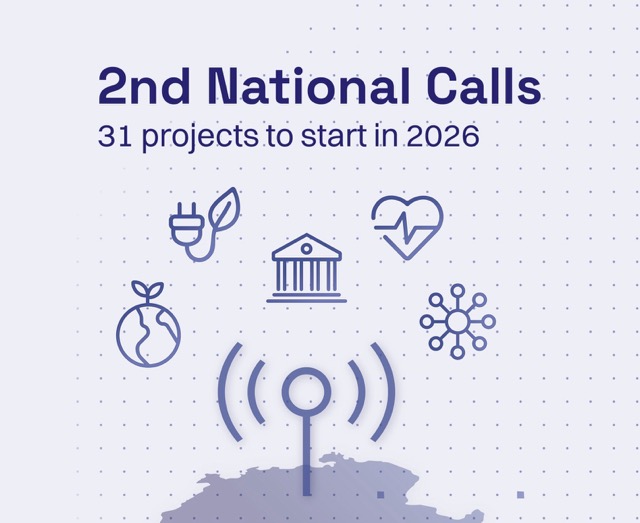
The SDSC to support 31 projects through its second National Calls
The SDSC to support 31 projects through its second National Calls
SDSC and PSI teams jointly explore the AI potential of large-scale infrastructures
SDSC and PSI teams jointly explore the AI potential of large-scale infrastructures
Contact us
Would you like to explore how we can work together?
Our team of data scientists and professionals looks forward to engaging in impactful, results-driven collaborations with you.