

SCOPE
Sources and drivers of organic aerosol pollution in Europe and response to global warming and net-zero policies
Abstract
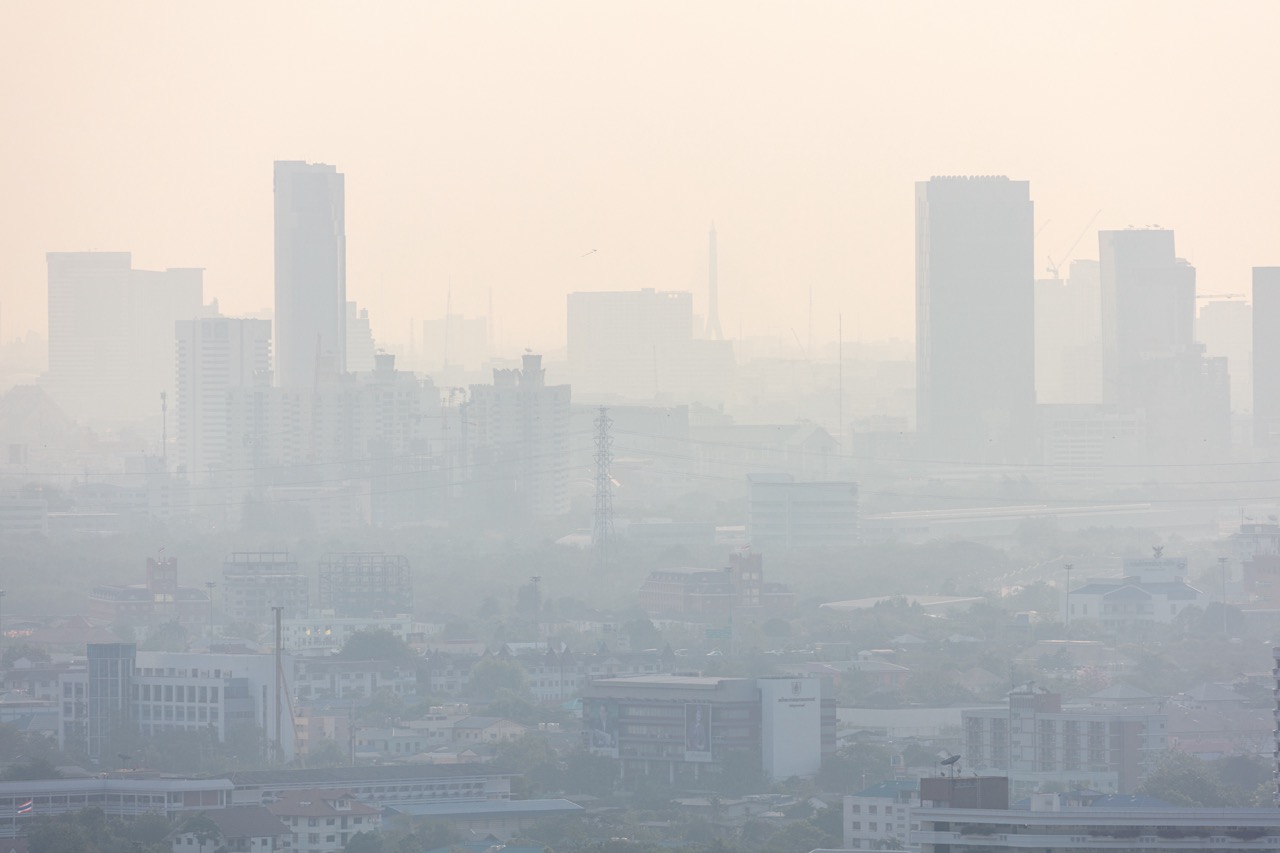
Particulate matter (PM) is a major environmental threat to human health. Its largest component, organic aerosol (OA), originates from human activities, such as like traffic and residential heating, as well as natural sources and chemical reactions in the atmosphere. Its complex composition makes it difficult to predict OA concentrations, determine their sources, and assess its effects on human health.
In a multidisciplinary collaboration between atmospheric scientists, epidemiologists, and data scientists, the SCOPE project will develop detailed daily maps of OA concentrations and sources across Europe over several decades. Combined with mortality data, these maps will help quantify premature deaths linked to different OA sources. The project will also investigate how weather, human activity, and land use shape OA levels, and how these may change under future climate conditions and Net-Zero emission scenarios. The findings will support more effective environmental and public health policies.
People
Collaborators

Simon joined the SDSC as a senior data scientist in April 2022. He conducted his doctoral research on statistical modeling of high-dimensional genetic data at ETH Zürich and earned his MSc and BSc degrees in computer science from the Technical University of Munich. His research interests lie broadly in probabilistic machine and deep learning, generative modeling, causal inference, and approximate inference. Simon is an avid open-source software contributor, with a particular enthusiasm for probabilistic programming languages and numerical computing.



Geoffrey Chinot joined SDSC in September 2025 as a Senior Data Scientist in the Research team.
Geoffrey received his PhD in robust machine learning from Institut Polytechnique de Paris in 2020 and later worked as a postdoctoral researcher at ETH Zurich. Before joining SDSC, he was a Senior Research Scientist at LIOM, leading projects on temporal sensor data analysis, developing machine learning pipelines, and managing a team of researchers. His research interests include robust statistics, deep learning, and the modeling of complex, high-dimensional data.
Outside of work, Geoffrey is passionate about sports and is deeply involved in his rugby club.
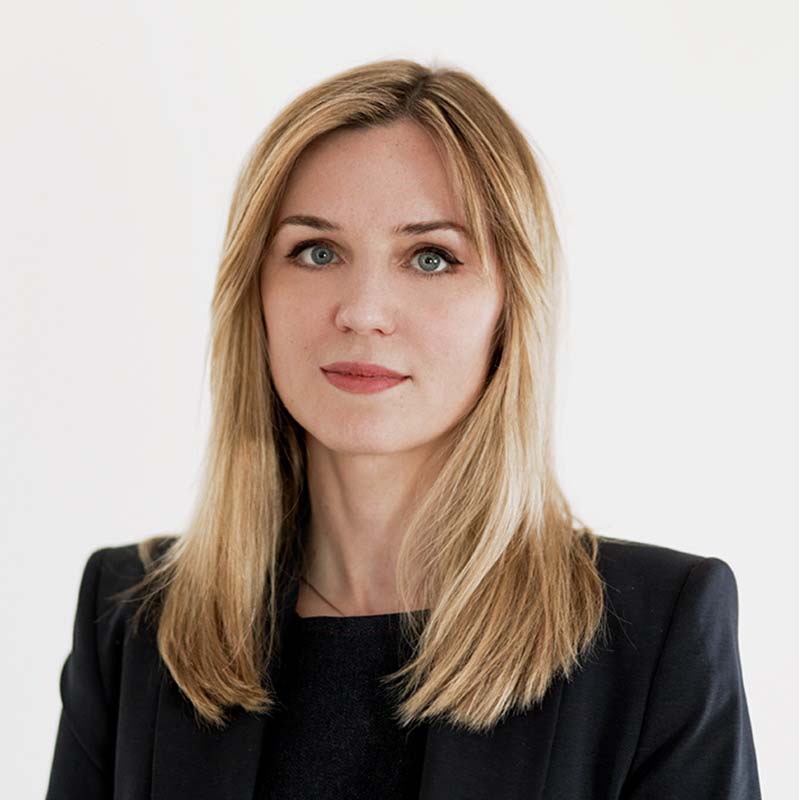
Ekaterina received her PhD in Computer Science from Moscow Institute for Physics and Technology, Russia. Afterwards, she worked as a researcher at the Institute for Information Transmission Problems in Moscow and later as a postdoctoral researcher in the Stochastic Group at the Faculty of Mathematics at University Duisburg-Essen, Germany. She has experience with various applied projects on signal processing, predictive modelling, macroeconomic modelling and forecasting, and social network analysis. She joined the SDSC in November 2019. Her interests include machine learning, non-parametric statistical estimation, structural adaptive inference, and Bayesian modelling.
PI | Partners:
Laboratory of Atmospheric Chemistry, Centre for Energy and Environment, PSI
- Dr. Imad El Haddad
- Dr. Kaspar Daellenbach
- Prof. Andre S. H. Prevot
Swiss Tropical and Public Health Institute
- Dr Kees de Hoogh
- Dr Danielle Vienneau
description
Motivation
Currently, there exist no approaches to estimate the causal effect of weather, temperature and other (climate) variables on OC concentrations, making informed decision on OA pollution mitigation difficult. The SCOPE project will develop and apply causal analysis methods to identify cause-and-effect relationships between environmental and geological factors and their effect on organic aerosol (OA) concentrations.
Proposed Approach / Solution
The SDSC will combine causal discovery techniques with double and orthogonal machine learning to determine which factors influence OA levels and estimate the strength of their effects.
Impact
We expect that our work will help inform decision-making for environmental and public health policies to reduce OA pollution from the identified sources (causes), resulting in improvements of general public health, climate research and guiding sustainable development.
Presentation
Gallery
Annexe
Additional resources
Bibliography
- Prüss-Üstün, A., et al. (2016). Preventing disease through healthy environments: a global assessment of the burden of disease from environmental risks.
- Landrigan, P. J., et al. (2018). The Lancet Commission on pollution and health.
- Chen, G., et al. (2022). European aerosol phenomenology− 8: Harmonised source apportionment of organic aerosol using 22 Year-long ACSM/AMS datasets.
- Burnett, R., et al. (2018). Global estimates of mortality associated with long-term exposure to outdoor fine particulate matter.
- Chernozhukov, V., et al. (2018). Double/debiased machine learning for treatment and structural parameters.
Publications
Related Pages
More projects

MOBIKO

I-DEEP-TRUST

ECOCLIM

Merck: cancer care adverse events
More projects
News
Latest news
La science des données au service de la neutralité carbone du canton : ENERBAT ouvre la voie
La science des données au service de la neutralité carbone du canton : ENERBAT ouvre la voie

The SDSC to support 31 projects through its second National Calls
The SDSC to support 31 projects through its second National Calls
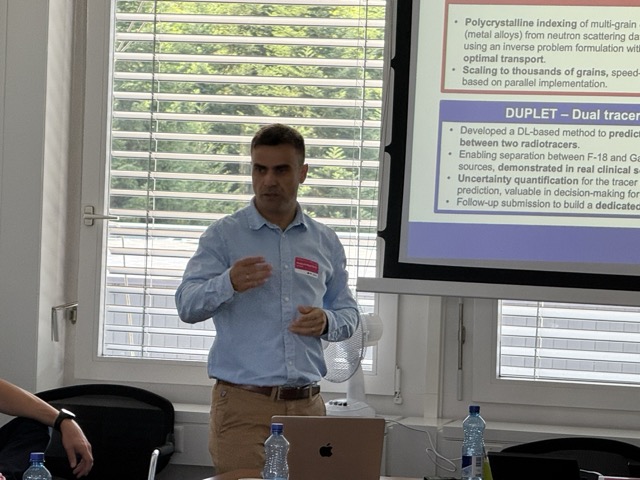
SDSC and PSI teams jointly explore the AI potential of large-scale infrastructures
SDSC and PSI teams jointly explore the AI potential of large-scale infrastructures
Contact us
Would you like to explore how we can work together?
Our team of data scientists and professionals looks forward to engaging in impactful, results-driven collaborations with you.